

Cracks in brick walls can indicate anything from minor cosmetic damage to more extensive masonry or structural concerns. While some cracks may require straightforward mortar repairs, others can indicate moisture intrusion, deteriorating bricks, or movement within the building. Understanding the cause is essential to choosing the right repair and preventing recurring damage.
For homeowners, a successful brick repair should accomplish more than covering a visible crack. It should restore the wall’s appearance, protect the surrounding masonry, and provide a lasting solution that complements the original construction. Improper repairs can leave noticeable patches, accelerate deterioration, or allow the underlying problem to continue.
With more than 40 years of experience serving the Dallas-Fort Worth area, Brick Doctor specializes in professional brick and masonry repairs designed to preserve the appearance, durability, and value of residential and commercial properties.
How Experts Assess Cracks in Brick Walls
The first step in repairing a cracked brick wall is identifying the cause of the damage. Not every crack indicates a serious problem, but its location, direction, width, and surrounding conditions can provide important clues.
Hairline cracks confined to individual bricks may have different causes than cracks extending through multiple bricks and mortar joints. Similarly, deteriorating mortar can create openings that resemble structural cracking but require a different repair approach.
Experienced masonry professionals evaluate the entire affected area rather than focusing exclusively on the visible crack. They look for patterns and other warning signs that may help identify the underlying issue.
Common signs that deserve attention include:
- Diagonal cracks: Cracks near window and door openings may indicate localized stress or movement around those areas.
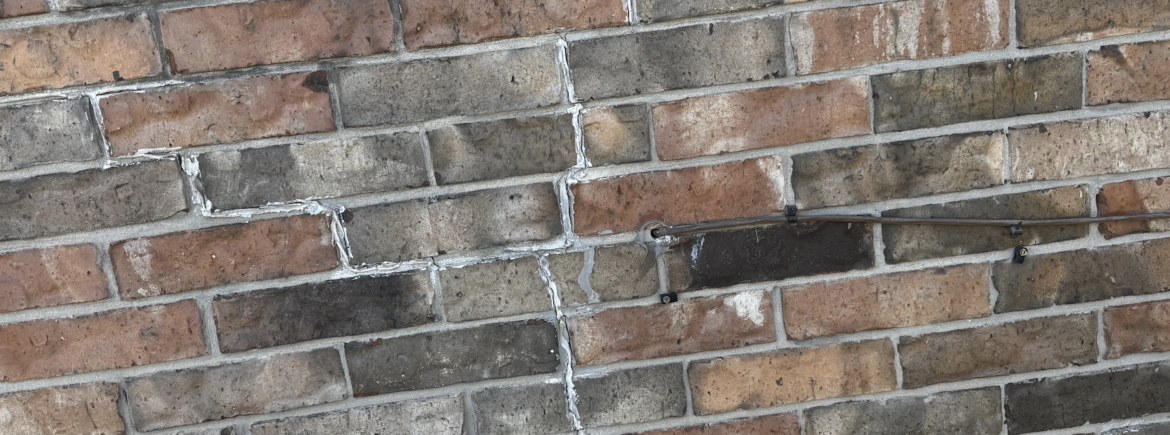
- Stair-step cracks: Cracks following mortar joints can be associated with differential movement or other masonry stresses.
- Horizontal cracks: These may indicate pressure or movement affecting the wall and warrant professional evaluation.
- Bulging or displaced brickwork: Sections that appear uneven or separated may indicate a more significant masonry or structural concern.
- Deteriorating mortar: Crumbling, missing, or separating mortar can allow moisture to penetrate the wall.
- Recurring cracks: Damage that repeatedly appears after previous repairs may indicate an unresolved underlying condition.
Crack patterns alone cannot confirm foundation failure. Professionals may also examine drainage, exterior grading, nearby soil conditions, and the condition of surrounding masonry to understand what could be contributing to the damage.
When a crack appears to be changing, photographs and appropriate monitoring devices can help document its progression. This information can assist professionals in determining whether further investigation is necessary before masonry repairs begin.
Choosing the Right Brick Wall Crack Repair Method
Once the damage has been evaluated, the next step is determining which repair method is appropriate. The solution depends on the condition of the masonry, the location of the crack, and whether the damage is limited to the mortar or affects the bricks or larger structure.
Mortar Repair and Tuckpointing
When mortar joints deteriorate, but the surrounding bricks remain in good condition, repointing may be the appropriate solution. This process restores damaged joints by replacing deteriorated mortar without requiring the removal of otherwise sound bricks.
Replacing Cracked or Damaged Bricks
When individual bricks are severely cracked, broken, or deteriorating, replacement may be more appropriate than attempting to patch the damaged surface. Removing and replacing affected units can restore the appearance and continuity of the wall.
The right replacement brick should complement the existing masonry in size, color, texture, and overall appearance. This can be challenging in established homes where the original materials may no longer be readily available.
Brick Doctor maintains an extensive inventory, including hard-to-find brick options, to help achieve more consistent matches. This is especially valuable when repairing older or distinctive masonry where a noticeable mismatch could affect the appearance of the entire wall.
Addressing More Extensive Masonry Damage
Cracks that extend across multiple bricks, appear alongside separation, or involve shifting masonry may require a more extensive evaluation. These conditions can indicate movement affecting more than the visible surface.
When underlying foundation or structural movement is suspected, a qualified foundation or structural professional may need to investigate the cause before masonry restoration proceeds. Repairing the visible damage without understanding an ongoing underlying problem may allow the cracking to return.
Selecting the right approach begins with understanding the type and extent of the damage. A professional assessment helps determine whether localized mortar restoration, brick replacement, or additional evaluation is needed.
How Professionals Repoint Mortar Joints and Replace Bricks
Once the appropriate repair method has been selected, the quality of the result depends on how the work is performed. Proper preparation, compatible materials, and precise workmanship help prevent unnecessary damage and allow repaired areas to blend with the surrounding masonry.
During repointing, deteriorated mortar is removed to an appropriate depth based on the joint dimensions and the condition of the existing material. Removing too little can leave unsound mortar behind and compromise the bond of the replacement material.
The exposed joints are then cleaned to remove loose mortar and debris. Depending on the masonry and weather conditions, the surrounding surfaces may also need to be dampened before fresh mortar is applied. These preparation steps help create suitable conditions for the replacement material.
New mortar is carefully packed into the prepared joints and finished to complement the existing joint profile. Consistent application and finishing help maintain a uniform appearance across the repaired area.
Material compatibility is equally important. Replacement mortar should work with the existing brick in terms of composition and strength, as well as complement its color and texture. A mixture that is significantly harder than the original mortar can place additional stress on softer bricks and contribute to deterioration over time. This is why selecting the right material requires an understanding of the existing masonry rather than relying on a standard mixture for every project.
Brick replacement also requires careful execution. The damaged unit must be removed without unnecessarily disturbing adjacent bricks. The opening is then prepared, and the replacement is positioned and aligned with the surrounding courses.
The finished work should maintain consistent spacing, alignment, and appearance. Replacement bricks and mortar should complement the existing wall rather than create an obvious visual contrast. Careful preparation and experienced workmanship help preserve the masonry’s appearance while supporting the durability of the repair.
For homeowners, these details make a difference beyond the immediate repair. Properly completed masonry work helps protect the surrounding materials and maintain the character and appearance of the property.
Addressing Foundation Movement and Moisture Problems
Brick cracks sometimes develop alongside foundation movement, drainage problems, or prolonged moisture exposure. These conditions can place stress on masonry and contribute to deterioration if they are not properly addressed.
North Texas properties face particular challenges associated with expansive clay soils. Changes in soil moisture can cause the ground to expand or contract, potentially contributing to movement beneath a building. Poor drainage and water collecting near the foundation can further complicate these conditions.
When foundation movement is suspected, repairing the visible brick damage alone may not resolve the underlying problem. A qualified foundation or structural specialist may need to determine whether stabilization or other corrective work is necessary before masonry restoration begins.
Moisture is another important consideration. Water can enter through deteriorated mortar joints, damaged bricks, and other openings in the exterior wall. Repeated exposure can weaken mortar, contribute to brick deterioration, and create conditions that lead to interior moisture problems.
Efflorescence is another possible sign of moisture movement. It appears as a white, powdery deposit on masonry surfaces when water carries soluble salts through the material and leaves them behind as it evaporates.
Simply sealing a visible crack does not necessarily resolve the source of water intrusion. Professionals must consider how water is entering the masonry and whether deteriorated joints, drainage problems, or other conditions require attention.
Where appropriate, compatible masonry treatments may help reduce water penetration while allowing moisture vapor to escape. However, products should be selected based on the wall’s materials and condition. They are not substitutes for repairing defective joints or correcting other sources of moisture.
Matching Brick Repairs and Preventing Future Cracks
A successful brick repair should restore more than the immediate appearance of the damaged area. It should also consider the surrounding masonry, the materials used in the original construction, and any conditions that could contribute to future deterioration.
Material matching is particularly important for homeowners who want to preserve the appearance of an established property. Differences in brick color, texture, size, and mortar finish can make even a small repair noticeable.
This is where experience and material availability make a difference. Brick Doctor has spent more than four decades developing its masonry expertise and maintaining an extensive selection of brick for challenging repair projects. The goal is to create repairs that blend with the original masonry rather than leave behind noticeable patches.
Movement joints may also be relevant in certain masonry applications. Clay brick naturally expands over time and responds to temperature and moisture changes. Properly designed expansion joints help accommodate this movement and reduce the potential for cracking. Their placement and maintenance should account for the wall’s construction and existing design.
Homeowners can help protect their masonry by periodically checking exterior walls for developing cracks, deteriorating mortar, loose bricks, and signs of water intrusion. Addressing these conditions early may prevent more extensive repairs later.
If you notice new cracks, recurring mortar damage, or changes in the appearance of your brickwork, arranging a professional assessment is a sensible next step. Waiting until the damage becomes more extensive can limit repair options and increase the amount of work required.
Protect Your Property with Professional Brick Repair
Cracks in brick walls should never be evaluated by appearance alone. Understanding the cause of the damage, selecting compatible materials, and applying the appropriate repair methods are essential to achieving lasting results.
Since 1986, Brick Doctor has helped homeowners and property owners throughout the Dallas-Fort Worth area with professional brick and masonry repairs. With more than 40 years of experience, an extensive inventory of hard-to-find brick, detailed written scopes of work, and a Low Price Guarantee, the company is equipped to handle a wide range of masonry concerns.
Whether your property needs brick replacement, mortar repair, tuckpointing, or chimney and arch restoration, Brick Doctor focuses on workmanship that protects both the appearance and durability of your masonry.
Protect your property’s appearance with professional brick and masonry repairs from Brick Doctor. With more than 40 years of experience, an extensive brick inventory, and a commitment to quality workmanship, our team is ready to help. Call 817-540-1800 or request your free quote to discuss your project.

James R. Jennings, President of Brick Doctor, brings 42 years of masonry and construction industry experience to every project. With advanced business degrees and a strong record of service-focused leadership, James has helped Brick Doctor earn trusted recognition from Angie’s List, the Good Contractors List, and the Better Business Bureau.